
Author: Dr Laila Surani
Founder & CEO, EMAGE CIC
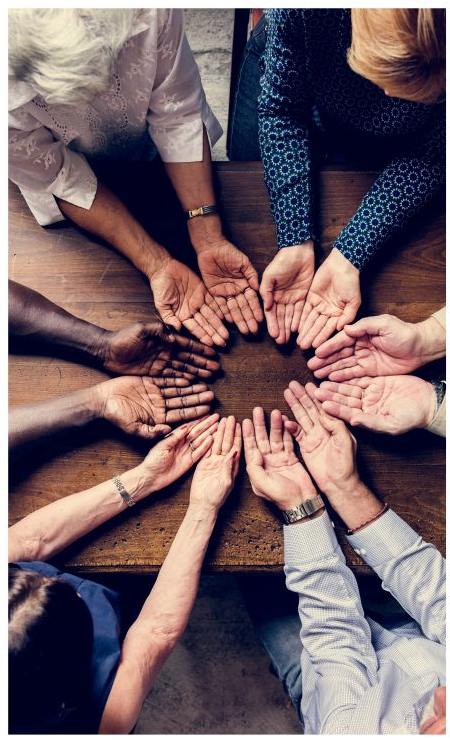
Community did not begin as a concept, a policy, or a service. It began as a way of being human.
Long before sociology, anthropology, or political theory existed, people lived in relationship with one another. Survival depended on cooperation, care, and shared responsibility. What modern theory now explains, early humanity simply lived.
When we look closely at how communities formed, changed, and fractured over time, we begin to see a powerful truth:
Humanity did not evolve away from community — systems did.
Relational Human Theory: Why Community Comes Before Everything Else
At the foundation of human life is what scholars now describe as Relational Anthropology or Relational Human Theory. This theory argues that human beings are not independent by nature — they are fundamentally relational. Identity, safety, and meaning emerge through connection with others.
This idea is visible in the earliest human narratives:
- People were not created to live alone
- Belonging came before structure
- Care, responsibility, and identity were shared
In early communities, there was no separation between the individual and the group. To exist was to belong. Community was not chosen — it was inherent. This explains why community is universal and pre-political. It existed long before governments, institutions, or social systems.
Functionalist Theory: How Early Communities Worked
As humans formed tribes and settlements, roles naturally emerged. This is what Functionalist Social Theory explains.
People took on different responsibilities:
- Some hunted or gathered
- Some cared for children
- Some preserved knowledge and culture
- Elders guided decision-making
Each role supported the stability of the whole group.
Importantly, older people were not marginalised. They were central. Their knowledge, memory, and experience held communities together. This theory helps us understand that early societies were not chaotic — they were deeply organised, just not institutionalised.
Cultural Evolution Theory: Difference Was Never the Problem
As people spread across different regions, cultures evolved. Language, traditions, food, and belief systems developed in response to environment and experience.
This is explained through Cultural Evolution Theory, which shows that:
- Human difference is adaptive, not hierarchical
- Culture develops through environment and necessity
- Diversity strengthens survival
Ethnicity, in its original sense, was about belonging and continuity — not exclusion. The problem began when difference was given power.
Social Stratification Theory: When Power Changed Community
With population growth came competition for land, resources, and control. This is where Social Stratification and Conflict Theory emerge.
Societies began ranking people based on:
- Birth
- Occupation
- Wealth
- Ethnicity
Hierarchies formed. Caste systems developed. Access to resources became unequal. This was the moment community shifted from shared humanity to structured inequality.
What had once been cooperative became competitive. What had once been inclusive became divided. This shift fundamentally changed how people related to one another.
Institutional Theory: When Care Left the Community
For centuries, care remained within families and communities. But as societies grew more complex, responsibility shifted.
Institutional Theory explains how organisations emerge to manage growing needs — healthcare, welfare, education, and social order.
While institutions brought structure and efficiency, they also created distance:
- Care moved from homes to systems
- Relationships were replaced by procedures
- People became service users instead of community members
This was not intentional harm — it was a response to scale. But it came with a cost.
Medicalisation and Social Control
As industrialisation accelerated, human experiences such as ageing, illness, and dependency were increasingly framed as problems to be managed. This is explained through Medicalisation Theory.
People were no longer seen primarily as individuals with stories, cultures, and identities. They became:
- Patients
- Cases
- Numbers in systems
Care became technical rather than relational. Efficiency replaced empathy. This shift particularly affected older adults and marginalised communities, whose cultural ways of caring were often ignored or dismissed.
Welfare and Bureaucratic Theory: When Systems Replaced Relationships
Modern welfare systems improved access and protection, but they also introduced bureaucracy. According to Bureaucratic Theory, systems prioritise rules, standardisation, and equality of process. While this can create fairness, it often reduces personal agency and cultural sensitivity. Care becomes something done to people rather than with them. This is why many people today feel disconnected from systems that are meant to support them.
The Return to Community: Asset-Based and Human-Centred Theory
In recent years, a shift has begun.
Asset-Based and Human-Centred Theories recognise that:
- People are not problems to be fixed
- Communities hold strengths and knowledge
- Wellbeing grows through relationships
- Belonging is essential to health
These approaches do not reject institutions — they reorient them around humanity. In many ways, this is not innovation. It is a return.
Assets based community model (ABCD) simply gives modern language to an ancient truth:
that communities are not empty vessels in need of fixing, but living systems rich with capability, resilience, and knowledge.
What makes this approach especially powerful today is that it challenges deficit-based thinking — the idea that communities, particularly ethnic minority or ageing populations, are defined by need. Instead, it restores dignity by recognising lived experience as expertise, relationships as resources, and participation as essential to wellbeing. In this sense, ABCD is not a new methodology. It is the rediscovery of how humanity has always survived, adapted, and flourished.
What This Means for EMAGE
EMAGE’s work sits directly within this theoretical journey.
It reflects:
- Relational theory — by centring human connection
- Functional theory — by valuing lived experience
- Cultural theory — by respecting identity and heritage
- Asset-based theory — by building on community strengths
EMAGE recognises that ageing is not a deficit, and community is not a service. It is a living system shaped by relationships, dignity, and shared responsibility. Rather than replacing institutions, EMAGE helps humanise them.
Final Reflection
Social theory tells us something powerful: Community was lived before it was studied. Humanity came before systems. Belonging existed before bureaucracy.
And perhaps the most important lesson of all is this:
The future of care does not lie in creating more systems — but in remembering how to be human together.