Author: Dr Laila Surani
Founder & CEO, EMAGE CIC
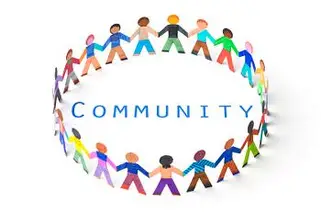
Before there were no systems, services, or institutions, there was community.
Before policies, professions, or organisations existed, people survived — and thrived — through shared life, mutual care, and collective responsibility. Community is not a modern idea. It is as old as humanity itself.
Community Before the Word Existed
In the earliest stages of human life, people did not live in isolation. Survival depended on cooperation — sharing food, protecting one another, raising children together, and caring for older members of the group. Families, kinship networks, and small groups formed the foundation of human life.
There was no formal word for “community” then, because it was simply how people lived. Belonging, responsibility, and connection were natural parts of existence. Care was not assigned or outsourced; it was shared.
In this sense, community existed long before language was developed to describe it.
How Community Took Shape
As human societies evolved, so did culture and identity. People settled in different regions, adapted to their environments, and developed distinct languages, traditions, and ways of living. These differences strengthened communities and helped them survive.
The word community itself comes from the Latin communitas, meaning “togetherness” or “shared life,” and from communis, meaning “common to all.” At its core, community has always meant connection, mutual responsibility, and belonging.
Early civilisations reflected this through collective decision-making, shared values, and respect for elders. Community life was built on cooperation, not separation.
When Difference Became Division
Over time, however, population growth and competition for resources changed how societies functioned. As power structures emerged, difference slowly turned into division. Geography created cultural variety. Language shaped identity. Tradition built belonging.
But hierarchy transformed these differences into systems of control.
Some groups began to dominate others. Social ranking, class systems, and later caste and racial divisions emerged. What had once been natural diversity became justification for inequality. Community, once inclusive, became fragmented.
Ethnicity and culture — originally sources of pride and belonging — were increasingly used to exclude, marginalise, or devalue others.
From Community Care to Institutional Care
For centuries, care remained rooted in families and local communities. Older people were respected as knowledge holders. Support was relational, continuous, and deeply human.
This began to change as societies industrialised. Urbanisation, economic pressure, and changing family structures meant people could no longer rely on close-knit community care. Responsibility gradually shifted away from families and into formal systems. Care became organised, regulated, and professionalised.
Institutions emerged to manage:
- Health
- Ageing
- Disability
- Poverty
While this brought structure and consistency, it also created distance. Care became something delivered to people rather than shared with them. Human stories were replaced by assessments, eligibility criteria, and service pathways.
What We Lost Along the Way
Institutional systems improved access and safety, but they also removed something essential.
We lost:
- A sense of belonging
- Intergenerational connection
- Cultural understanding
- The human face of care
People became service users rather than community members. Loneliness became widespread. Older adults, particularly from ethnic minority backgrounds, were often left feeling unseen, unheard, and disconnected.
The problem was not institutions themselves — it was the loss of humanity within them.
Why Community Matters More Than Ever
Today, we are beginning to recognise what was lost.
Across health, social care, and community development, there is a growing understanding that wellbeing cannot be achieved through systems alone. Real wellbeing comes from relationships, trust, cultural connection, and feeling valued.
This is why community-led approaches are gaining attention — not as an alternative to services, but as their foundation. Community is not an “extra.” It is essential.
Where EMAGE Fits In
This is where the work of EMAGE becomes deeply meaningful. EMAGE operates from the understanding that ageing is not a problem to be managed, but a life stage that deserves dignity, respect, and cultural understanding. By working closely with ethnic minority communities and older adults, EMAGE helps reconnect care with humanity — restoring the sense of belonging that institutional systems often overlook.
Through community-led engagement, shared learning, and culturally informed support, EMAGE bridges the gap between people and services, between policy and lived experience. Its work reflects the original purpose of community: people supporting one another, valuing lived experience, and building wellbeing together. In doing so, EMAGE reminds us that true care does not begin with systems or structures, but with relationships, respect, and shared humanity.
A Final Reflection
Humanity created community to survive together. Over time, systems replaced relationships.
Efficiency replaced connection. Structure replaced belonging.
Now, we are being called to return — not backwards, but forward — to a model where community and humanity walk hand in hand.
Because in the end, community is not about buildings, labels, or services.
It is about people. And it always has been.